Hello again. I can’t believe that it’s been nearly a month since my last blog! It’s been a busy month, with the new Wednesday class starting and my first few weeks of 1 to 1 sessions. I have also had a busy time at home (yes, I do have a home life!). Having been gifted some gorgeous new furniture, I have had to completely rearrange my home and have even done a bit of decorating. Hence the lack of blog content.
Returning to the subject of the Benefits of Seated Exercise and specifically the programme I teach.
Joint Mobilization.
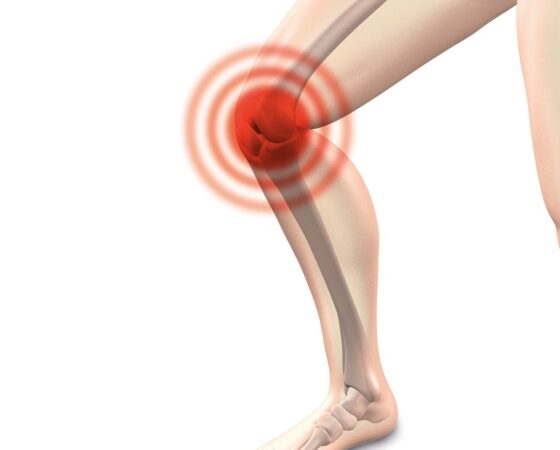
Joint Mobilization is a fancy way of saying stretching, but it is also more than that. I’m sure I don’t need to tell you that as we age we get a bit stiffer. Even if we have had a lifetime of health and fitness, our skeleton ages at a steady pace. The parts of our skeleton where we often notice this the most in is in our joints. They get stiff. They get creaky. And, more often than not, we get a visit from our old friend Arthur – Arthur Eye Tis (arthritis). This is a fact of life and there is no getting away from it.
Exercises
This programme was written with total acceptance of this and rather than essentially ignoring this issue, as many exercise programmes tend to do, the premise of this one is to help the joints in two major ways. The first is joint mobilization.
After a brief warm up, this is the first thing we do in each class. It is important to have the joints at their best before we use them for the exercises, in exactly the same way as it is important to warm up and stretch our muscles. Most classes do muscle warm-ups, very few pay the same attention to the joints. As mentioned above, we do this by stretching, but it is a very specific way of stretching.
The key to the joint movement is to do it slowly. We mobilize our shoulders and upper back, the mid-back, our ankles and our lower back. It is easy to forget that our backs are made up entirely of joints and need to be cared for in the same way as our other joints.
As we slowly stretch our joints to the furthest points we can without pain, we increase the cavities (or spaces) within those joints. In these spaces is a fluid which helps reduce the friction within our joints as we move. It is called Synovial Fluid and has a similar consistency to egg whites – not the most appealing thought! However, it is very important stuff and it works like greasing a hinge, reducing the friction and so allowing ease of movement within that joint. We lose Synovial fluid as we age, so it is crucial to be kind to the fluid we have left, allowing it the space to do it’s job to it’s fullest capacity.
The second way that my class helps our aging joints is again by accepting this fact of life and working with the muscles and other soft tissue around the joints. The stronger the elements are that support the joint the less the joint itself has to do.
This is why it is such a fantastic programme for older adults and adults with mobility issues – even if that issue is just the sedentary lifestyle that so many of us were forced to adopt during the Covid lockdowns.
Benefits
We have all heard the phrase “use it or lose it.” This applies to every part of our bodies. One of the most obvious results of reduced mobility is loss of strength. For example, we see that in increased difficulty walking the distances or lifting the weights that we previously had to trouble with. Another common result is reduced flexibility. This manifests as problems lifting your arms (reaching cupboards or even washing your hair), bending down (again those pesky kitchen cupboards) and even reduced neck movement (especially impactful on drivers but also for pedestrians looking left and right to cross the street). I have witnessed people having to turn their whole body to look for traffic having lost almost all neck movement. This is far from ideal!
I have said it before and I will, no doubt, say it again: my primary aim for teaching these exercises is to make everyday life SAFER. As a consequence of this, the class also makes everyday life easier, but it is safety that is my number one priority. If reaching that top cupboard to get a casserole dish (or whatever it is that you keep in the top kitchen cupboards) is a struggle then it just isn’t safe. If restricted neck movement means that you cannot fully turn your head left and right whilst pulling out of a junction then that just isn’t safe.
The 5 minutes that we spend on joint mobilization each class ensures that you will not lose your current range of movement and, as time goes on, increases that range of movement to the best that your body is capable of.
Plus, every one of my clients who have told their arthritis doctors about doing my Seated Exercises, have reported back to me that the doctors have been really pleased to hear that and that it, no doubt, helps with this condition.
And just think – all of these wonderful benefits come in just a 5 minute segment of the class! Can you imagine the enormous benefits you gain from also doing the other 55 minutes?!